
Application tips, strategies, draw odds, and much more information for all of South Dakota's deer hunts

Item |
Resident |
Nonresident |
Habitat stamp |
$25 |
$25 |
Any deer - Type 01 |
$45 |
$375 |
Any buck deer - Type 02 |
$45 |
$375 |
Any antlerless deer - 03 |
$24 |
$100 |
Any deer and one antlerless deer - Type 08 |
$60 |
$425 |
Any whitetail - Type 11 |
$45 |
$375 |
Any Buck Deer - 12 |
$45 |
$375 |
Antlerless whitetail - Type 13 |
$24 |
$100 |
Any whitetail and one antlerless whitetail - Type 18 |
$60 |
$425 |
Two antlerless whitetail - Type 19 |
$36 |
$150 |
Custer any whitetail - Type 11 |
$156 |
N/A |
Preference points |
$5 |
$10 |
Item | Resident | Nonresident |
Habitat stamp | $25 | $25 |
Any deer - Type 01 | $45 | $375 |
Any buck deer - Type 02 | $45 | $375 |
Any antlerless deer - 03 | $24 | $100 |
Any deer and one antlerless deer - Type 08 | $60 | $425 |
Any whitetail - Type 11 | $45 | $375 |
Any Buck Deer - 12 | $45 | $375 |
Antlerless whitetail - Type 13 | $24 | $100 |
Any whitetail and one antlerless whitetail - Type 18 | $60 | $425 |
Two antlerless whitetail - Type 19 | $36 | $150 |
Custer any whitetail - Type 11 | $156 | N/A |
Preference points | $5 | $10 |
West River Unit 15A | 2+ Pool |
|---|---|
Licenses available to preference group | 52 |
Number of applications | 10 |
Licenses issued | 10 |
Remaining licenses | 42 |
West River Unit 15A | 1+ Pool |
Licenses available to preference group | 42 |
Number of applications | 25 |
Licenses issued | 25 |
Remaining licenses | 17 |
West River Unit 15A | 0+ Pool |
Licenses available to preference group | 17 |
Number of applications | 41 |
Licenses issued | 17 |
Remaining licenses | 0 |
West River Unit 15A | Licenses available to preference group | Number of applications | Licenses issued | Remaining licenses |
|---|---|---|---|---|
2+ Pool | 52 | 10 | 10 | 42 |
1+ Pool | 42 | 25 | 25 | 17 |
0+ Pool | 17 | 41 | 17 | 0 |
Application Type |
Resident |
Nonresident |
West River Deer |
X |
X |
East River Deer |
X |
|
Black Hills Deer |
X |
X |
Custer State Park Deer |
X |
|
Refuge Deer |
X |
X |
Muzzleloader Deer |
X |
|
Muzzleloader Antlerless Deer |
X |
X |
Application Type | Resident | Nonresident |
West River Deer | X | X |
East River Deer | X |
|
Black Hills Deer | X | X |
Custer State Park Deer | X |
|
Refuge Deer | X | X |
Muzzleloader Deer | X |
|
Muzzleloader Antlerless Deer | X | X |
Unit | 02C |
|---|---|
Public land percentage | 59% |
Whitetail trophy potential | 150”+ |
Mule deer trophy potential | 170”+ |
No. of mule deer harvested | 68 |
No. of whitetail deer harvested | 29 |
Unit | 15A |
Public land percentage | 15% |
Whitetail trophy potential | 150”+ |
Mule deer trophy potential | 160”+ |
No. of mule deer harvested | 98 |
No. of whitetail deer harvested | 439 |
Unit | 27A |
Public land percentage | 31% |
Whitetail trophy potential | 150”+ |
Mule deer trophy potential | 160”+ |
No. of mule deer harvested | 51 |
No. of whitetail deer harvested | 53 |
Unit | 27B |
Public land percentage | 28% |
Whitetail trophy potential | 150”+ |
Mule deer trophy potential | 160”+ |
No. of mule deer harvested | 97 |
No. of whitetail deer harvested | 119 |
Unit | 27L |
Public land percentage | 99% |
Whitetail trophy potential | 150”+ |
Mule deer trophy potential | 160”+ |
No. of mule deer harvested | 2 |
No. of whitetail deer harvested | 11 |
Unit | 35A |
Public land percentage | 18% |
Whitetail trophy potential | 150”+ |
Mule deer trophy potential | 160”+ |
No. of mule deer harvested | 149 |
No. of whitetail deer harvested | 135 |
Unit | 35C |
Public land percentage | 16% |
Whitetail trophy potential | 150”+ |
Mule deer trophy potential | 160”+ |
No. of mule deer harvested | 120 |
No. of whitetail deer harvested | 115 |
Unit | 35L |
Public land percentage | 99% |
Whitetail trophy potential | 150”+ |
Mule deer trophy potential | 160”+ |
No. of mule deer harvested | 61 |
No. of whitetail deer harvested | 15 |
Unit | 39A |
Public land percentage | 24% |
Whitetail trophy potential | 150”+ |
Mule deer trophy potential | 160”+ |
No. of mule deer harvested | 77 |
No. of whitetail deer harvested | 101 |
Unit | 45B |
Public land percentage | 19% |
Whitetail trophy potential | 150”+ |
Mule deer trophy potential | 160”+ |
No. of mule deer harvested | 7 |
No. of whitetail deer harvested | 83 |
Unit | 45D |
Public land percentage | 49% |
Whitetail trophy potential | 160”+ |
Mule deer trophy potential | 170”+ |
No. of mule deer harvested | 12 |
No. of whitetail deer harvested | 44 |
Unit | 53A |
Public land percentage | 19% |
Whitetail trophy potential | 150”+ |
Mule deer trophy potential | 160”+ |
No. of mule deer harvested | 184 |
No. of whitetail deer harvested | 242 |
Unit | Public land percentage | Whitetail trophy potential | Mule deer trophy potential | No. of mule deer harvested | No. of whitetail deer harvested |
|---|---|---|---|---|---|
02C | 59% | 150”+ | 170”+ | 68 | 29 |
15A | 15% | 150”+ | 160”+ | 98 | 439 |
27A | 31% | 150”+ | 160”+ | 51 | 53 |
27B | 28% | 150”+ | 160”+ | 97 | 119 |
27L | 99% | 150”+ | 160”+ | 2 | 11 |
35A | 18% | 150”+ | 160”+ | 149 | 135 |
35C | 16% | 150”+ | 160”+ | 120 | 115 |
35L | 99% | 150”+ | 160”+ | 61 | 15 |
39A | 24% | 150”+ | 160”+ | 77 | 101 |
45B | 19% | 150”+ | 160”+ | 7 | 83 |
45D | 49% | 160”+ | 170”+ | 12 | 44 |
53A | 19% | 150”+ | 160”+ | 184 | 242 |
Residency | Resident |
|---|---|
100% with 0 points | 3 |
100% with 1 point | 15 |
100% with 2 points | 26 |
Residency | Nonresident |
100% with 0 points | 1 |
100% with 1 point | 3 |
100% with 2 points | 11 |
Residency | 100% with 0 points | 100% with 1 point | 100% with 2 points |
|---|---|---|---|
Resident | 3 | 15 | 26 |
Nonresident | 1 | 3 | 11 |
Residency | Resident |
|---|---|
100% with 0 points | 26 |
100% with 1 point | 34 |
100% with 2 points | 34 |
Residency | Nonresident |
100% with 0 points | 7 |
100% with 1 point | 20 |
100% with 2 points | 29 |
Residency | 100% with 0 points | 100% with 1 point | 100% with 2 points |
|---|---|---|---|
Resident | 26 | 34 | 34 |
Nonresident | 7 | 20 | 29 |
Species | Mule deer (01) |
|---|---|
100% with 0 points | 2 |
100% with 1 point | 4 |
100% with 2 points | 6 |
Species | Whitetail (01, 11) |
100% with 0 points | 7 |
100% with 1 point | 34 |
100% with 2 points | 45 |
Species | 100% with 0 points | 100% with 1 point | 100% with 2 points |
|---|---|---|---|
Mule deer (01) | 2 | 4 | 6 |
Whitetail (01, 11) | 7 | 34 | 45 |
Unit |
Whitetail trophy potential |
Mule deer trophy potential |
Public land percentage |
BH1 |
150”+ |
160”+ |
74% |
Unit | Whitetail trophy potential | Mule deer trophy potential | Public land percentage |
BH1 | 150”+ | 160”+ | 74% |
Season | SL1 |
|---|---|
License type | 01 - Any deer |
Resident odds | 83% with 5 points |
Nonresident odds | 55% with 12 points |
No. harvested | 6 |
Season | SL2 |
License type | 01 - Any deer |
Resident odds | 99% with 9 points |
Nonresident odds | 26% with 9 points |
No. harvested | 9 |
Season | SL4 |
License type | 01 - Any deer Muzzleloader Only |
Resident odds | 100% with 0 points |
Nonresident odds | 73% with 3 points |
No. harvested | 1 |
Season | SL5 |
License type | 01 - Any deer |
Resident odds | 90% with 0 point |
Nonresident odds | 51% with 5 points |
No. harvested | 3 |
Season | License type | Resident odds | Nonresident odds | No. harvested |
|---|---|---|---|---|
SL1 | 01 - Any deer | 83% with 5 points | 55% with 12 points | 6 |
SL2 | 01 - Any deer | 99% with 9 points | 26% with 9 points | 9 |
SL4 | 01 - Any deer Muzzleloader Only | 100% with 0 points | 73% with 3 points | 1 |
SL5 | 01 - Any deer | 90% with 0 point | 51% with 5 points | 3 |
Season | LC1 |
|---|---|
License type | 01 - Any deer Muzzleloader Only |
Resident odds | 73% with 12 points |
Nonresident odds | 46% with 9 points |
No. harvested | 5 |
Season | LC2 |
License type | 01 - Any deer Muzzleloader Only |
Resident odds | 52% with 16 points |
Nonresident odds | 29% with 19 points |
No. harvested | 6 |
Season | License type | Resident odds | Nonresident odds | No. harvested |
|---|---|---|---|---|
LC1 | 01 - Any deer Muzzleloader Only | 73% with 12 points | 46% with 9 points | 5 |
LC2 | 01 - Any deer Muzzleloader Only | 52% with 16 points | 29% with 19 points | 6 |
Season |
License type |
Resident odds |
Nonresident odds |
No. harvested |
WA1 |
01 - Any deer Muzzleloader Only |
98% with 10 points |
70% with 10 points |
5 |
WA3 |
01 - Any deer Muzzleloader Only |
100% with 0 points |
82% with 2 points |
2 |
Season | License type | Resident odds | Nonresident odds | No. harvested |
WA1 | 01 - Any deer Muzzleloader Only | 98% with 10 points | 70% with 10 points | 5 |
WA3 | 01 - Any deer Muzzleloader Only | 100% with 0 points | 82% with 2 points | 2 |
South Dakota offers a wide variety of big game hunting opportunities, with whitetail and mule deer being the most sought-after species. Hunters can pursue these deer using different weapon types, each providing its own unique experience. While many licenses are distributed through a lottery draw system, numerous over-the-counter (OTC) options are also available. Whitetail deer are the primary focus for most hunters, though mule deer are also plentiful—especially west of the Missouri River, as their numbers decline further east. In this article, we’ll explore the rifle deer draw process and explain the different license categories available to both residents and nonresidents.
The deadline to apply is June 23, 2026, by 8 a.m. CT. You can apply online here.
To aid in your research and planning efforts, we have a tool for Insiders called Hunt Planner. This tool will help you be more efficient at planning for hunts and also keep all your research data organized. No more notepads getting lost or headaches when trying to remember what units caught your eye during your research! Everything you need is always in one place at GOHUNT.
What can you do in Hunt Planner?
Point Tracker allows you to enter the number of points you have for each state and species, and as you research through Filtering and Draw Odds, your point total will automatically be highlighted.
To view important information and an overview of South Dakota’s rules/regulations, the draw system, tag and license fees, and an interactive boundary line map, check out our State Profile.
Residents and nonresidents at least 12 years old must possess a hunter safety card. For nonresidents, a copy of a current or previous hunting license issued to them from any state will suffice.
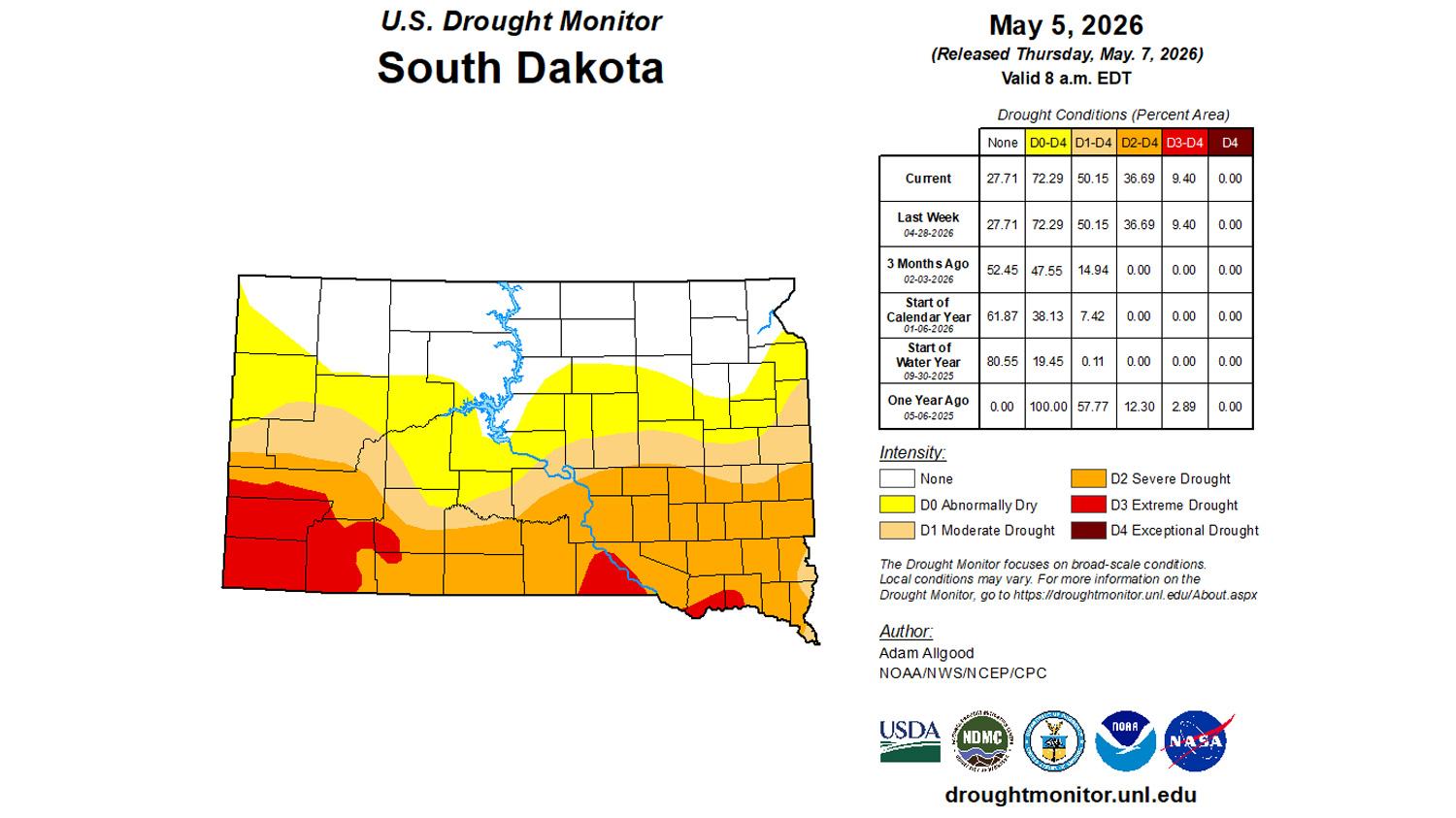
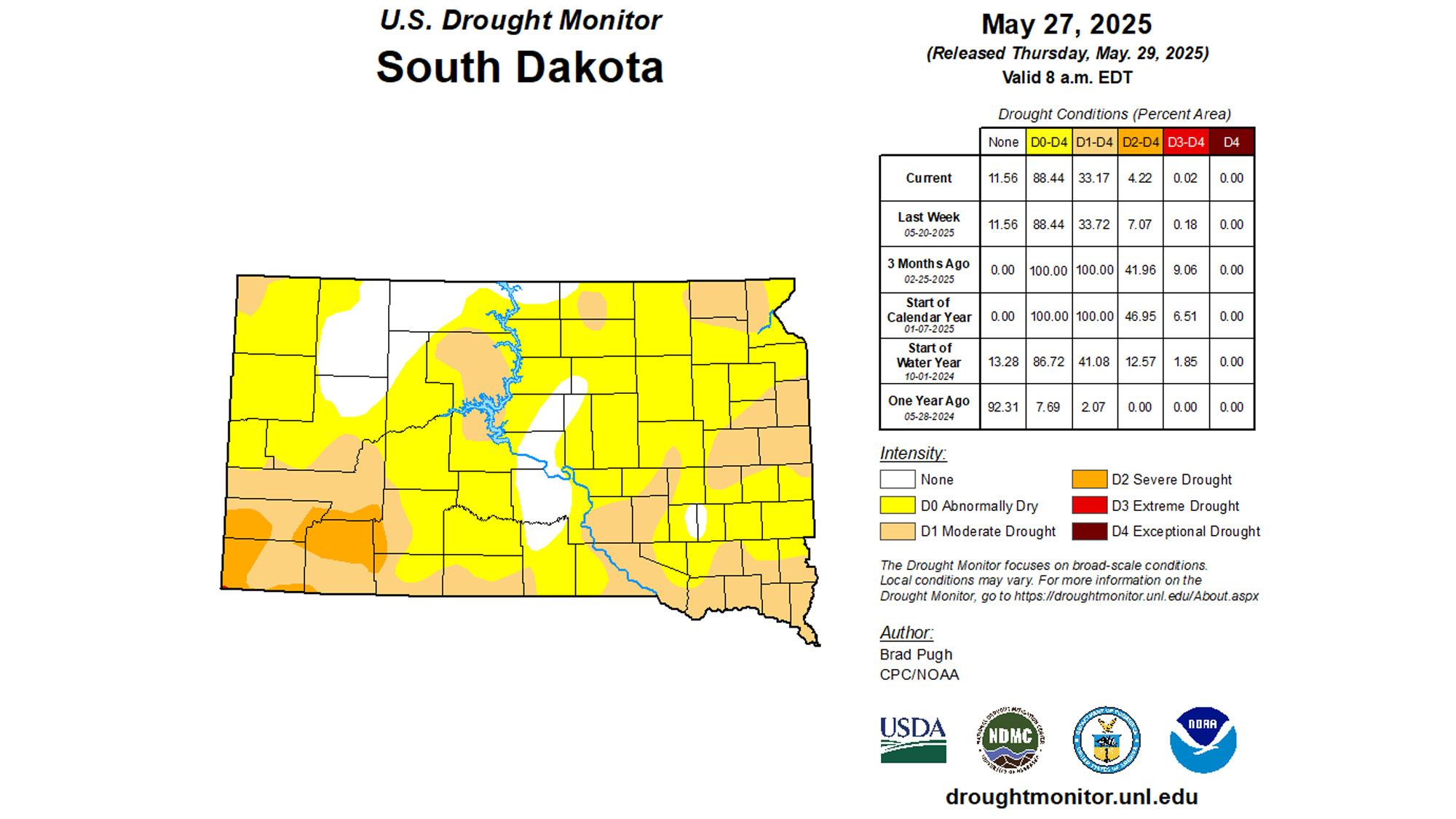
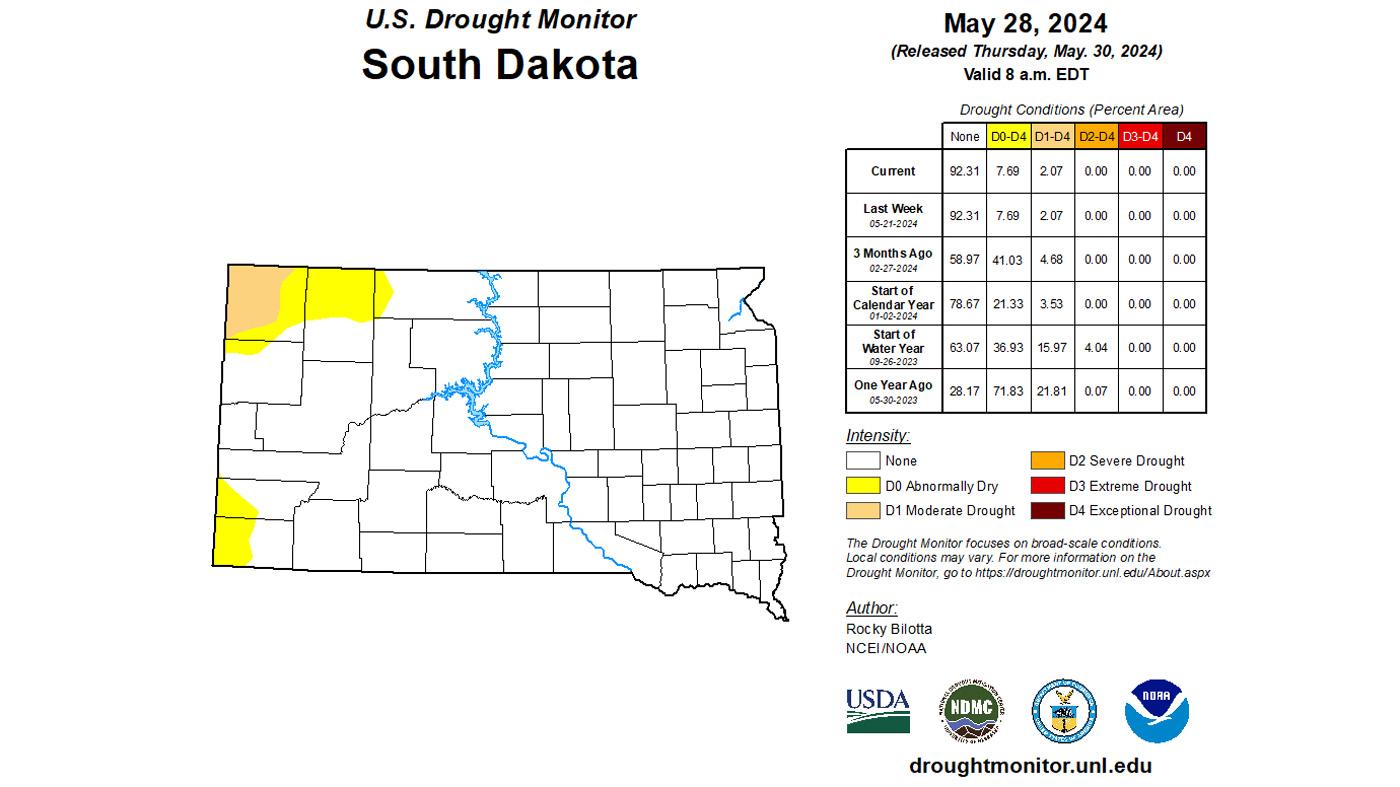
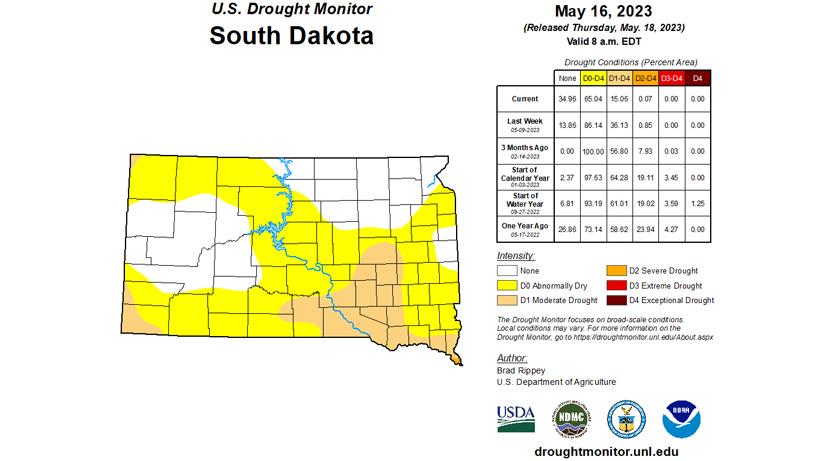
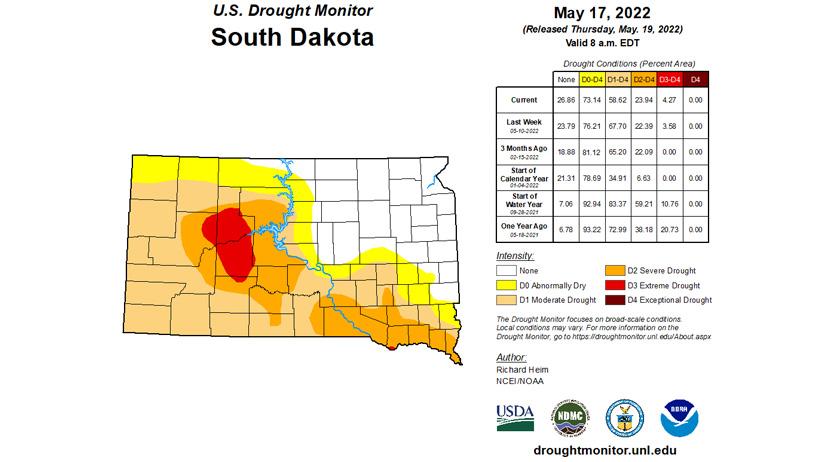
Compared to last year, South Dakota has actually fared fairly well in terms of moisture so far this year. This creates a more promising outlook for the 2026 hunting season, especially if additional spring and early summer rainfall materializes. However, as the map shows, the southern portion of the state is still experiencing moderate drought conditions.
2026
2025
2024
2023
2022
South Dakota uses a weighted preference point system for all big game species, and it is used for your first choice only. They run a cubed point system, unlike most states that run a squared system, but with the same concept. For example, if you have four preference points, they cube those points and add one for the current year. (For example, 4 x 4 x 4 + 1 = 65). So you would have 65 applications in the bucket for the specific hunt unit you wish to draw. From there, each application is assigned a random draw number, and they start the drawing process. If you are unsuccessful in drawing your first choice, you will be awarded a preference point. Only one preference point can be earned each year.
For the rifle deer draws, they use a tiered preference pool system when conducting the draw. For each hunt, there is a 2+ point pool, a 1+ point pool, and a 0+ point pool. All licenses allocated for that hunt unit are available to everyone who is in the 2+ preference pool first. This means that everyone who has 2+ preference points has the first shot at all those tags. If there are any licenses leftover after that draw, then anyone who has 1+ preference point now has a shot. Any remaining licenses will then be made available to those in the 0+ preference pool. Here is an example below:
For more information on how the draw is conducted, you can check out the preference point page.
If you choose not to apply for a license or enter the draw, you can still purchase a preference point during a designated period for the following year. Preference points are available from September 15 through December 15 and can be purchased through your Go Outdoors South Dakota profile. The cost is the same across all point categories—$5 for residents and $10 for nonresidents.
Group applications are allowed, with up to six people per group. All members must select the same first-choice unit and be included in the same designated group. In South Dakota, preference points are not averaged for group applications; instead, the group is assigned the lowest preference point total among its members. For example, if one applicant has six points and another has two, the group’s application will go into the draw with just two points. Both residents and nonresidents may apply together in the same group, but only for units where both residency types are permitted. Keep in mind, however, that residents applying with nonresidents may face reduced chances of drawing their first-choice license in most cases.
There are several different application types that residents and nonresidents can apply for, which are listed below. You are only allowed to submit two application types for the first drawing, but you are allowed to purchase and build points for all.
Although nonresidents have only a select few categories to choose from, there are cases where they might have a shot at leftover tags once the draw concludes. We will point those out in the category breakdowns below.
West River Deer covers 37 units—essentially all areas west of the Missouri River—excluding the Black Hills units and the Custer State Park unit. There are multiple license types available, and the right choice depends on the specific unit you plan to hunt. Most hunters focus on the Type 01 (any deer), Type 02 (any buck), or Type 11 (any whitetail) licenses, which are offered in many West River units.
For those primarily interested in securing a tag, there are also numerous antlerless license options. All West River rifle deer licenses are open to both residents and nonresidents. Mule deer are mostly found in the western half of the state, so if that’s your goal, a Type 01 (any deer) license for a West River unit may be a good fit.
Regardless of the license you draw, one of the biggest challenges in South Dakota is finding places to hunt and obtaining access. License options are listed below.
The East River Deer season includes 46 units spanning the area from the Missouri River eastward to the Minnesota and Iowa state lines. This region is primarily rich in whitetail deer, though a limited number of mule deer are harvested each year, especially in units along the Missouri River. East River Deer licenses are initially available to residents only throughout all draw periods. If any licenses remain after the final draw, nonresidents may then purchase those leftover tags.
There is a lot less public land in the eastern half of the state, which most residents are already aware of, so lining up a place to hunt prior to applying would be a smart move. The Type 01 any deer, Type 02 any buck deer, and the Type 11 any whitetail licenses are going to be the primary targets for most, but there are plenty of antlerless options available as well, depending on the unit you wish to pursue. License types for East River rifle deer are listed below:
Almost all of the units for East River Deer are well under 10% public land, so it would be wise to solidify a place to hunt before applying.
The 2026 Black Hills rifle deer season includes a single unit located along the far western edge of the state. One of its biggest advantages is the abundance of public land. Unit BH1 offers both Type 02 (any buck) and Type 12 (one whitetail buck) licenses. Hunters pursuing either mule deer or whitetail bucks in the Black Hills will want to apply for these options. No antlerless licenses will be available in the Black Hills for the 2026 season. Drawing odds may shift somewhat since Type 01 and Type 11 licenses are no longer offered, though the Type 02 license is still expected to have steep draw odds.
The Custer State Park license is for residents only, and there is only one license type for the 2026 season. There are no nonresident opportunities for Custer State Park. One of the biggest perks of this license is its 100% public land. Even for residents, the Type 11 any whitetail license is tough to draw, and you will have to be around the 20-point level to see odds above 10%. Once you draw this license, you are then strapped with a 10-year waiting period until you can apply again. Dive into our standalone draw odds to see what your odds are at your specific point level.
South Dakota has three wildlife refuges that are open to deer hunting, and these licenses are available through the state draw. The Sand Lake Refuge, Lacreek Refuge, and the Waubay Refuge are all eligible for both residents and nonresidents to apply. All three have multiple seasons to apply for, and all the license types available for the 2026 season are Type 01, any deer licenses. Some are rifle hunts, and some are muzzleloader-only hunts. The refuge options are broken down in the tables below:
As you can tell from the tables above, the earlier seasons have higher success rates but also much harder odds for both residencies. There are a couple of options at the lower point levels, which is something to consider if you’re just looking to grab a tag for this year.
The South Dakota muzzleloader deer license—designated as a Type 01 any-deer tag—is offered only to residents through a draw system. Compared to many other tags, it tends to be more attainable, with solid draw odds last year for hunters who had accumulated three or more preference points. Although the license can be used across most of the state, it’s important to check the regulations closely, as certain areas are excluded.
For hunters seeking a more flexible option, South Dakota offers a Type 13 antlerless whitetail muzzleloader license. This tag is open to both residents and nonresidents and is issued in unlimited numbers, so there’s no chance of missing out in the draw—though applying is still necessary. While it doesn’t cover the entire state, it is valid in many areas, so reviewing the regulations will help clarify where it can be used.
For resident adults, the biggest opportunity for OTC/unlimited licenses is the archery deer license. There are four different licenses available:
As a resident, you are allowed to purchase up to three of the four types listed above. There are restrictions to this where you can’t have more than one statewide license. You can only have one East River or West River (not both) and only one antlerless license. So, if you wanted to, you could purchase a statewide archery, an East River archery and an LM1 license all in the same year.
Resident and nonresident youth and apprentice deer are also OTC/unlimited, so if you have kids and want to get them involved, be sure to check out the state regulations for more information on those.
As previously mentioned, unlimited antlerless whitetail muzzleloader licenses are available, but it’s also worth watching for any leftover East River Deer tags once all draw periods have concluded. If you have access to private land, this can be a great opportunity to pick up an East River tag outside of the main draw process, but be sure to have a plan, as public land is very limited.
Save unit seasons in Filtering;
Never lose track of units you want to further research;
Rank seasons;
Can help decide what unit to apply for or what order to place your units when applying on a state's website;
Compare seasons (up to three at a time);
Save the filter settings you used in Filtering to find a great hunt;
Add notes to your research folder under season level or hunt folder level; and
Much more!
You may begin applying now.
The deadline to apply is June 23, 2026, by 8:00 a.m. CT.
You can apply online here.
Credit cards are accepted online (Visa, Mastercard, and Discover).
You are required to purchase a $25 habitat stamp prior to applying.
Unsuccessful applicants in the draw receive a preference point.
The preference point purchase window is from September 15 to December 15, 2026.
Type 01 - Any deer
Type 02 - Any buck deer
Type 08 - Any deer and one any antlerless deer
Type 11 - Any whitetail
Type 13 - Antlerless whitetail
Type 18 - Any whitetail and one antlerless whitetail
Type 19 - Two antlerless whitetail
Type 01 - Any deer
Type 02 - Any buck deer
Type 11 - Any whitetail
Type 13 - Antlerless whitetail
Statewide any deer
East River any deer
West River any deer
Antlerless LM1 antlerless whitetail