
Great rifle options to consider for your next spring bear hunt
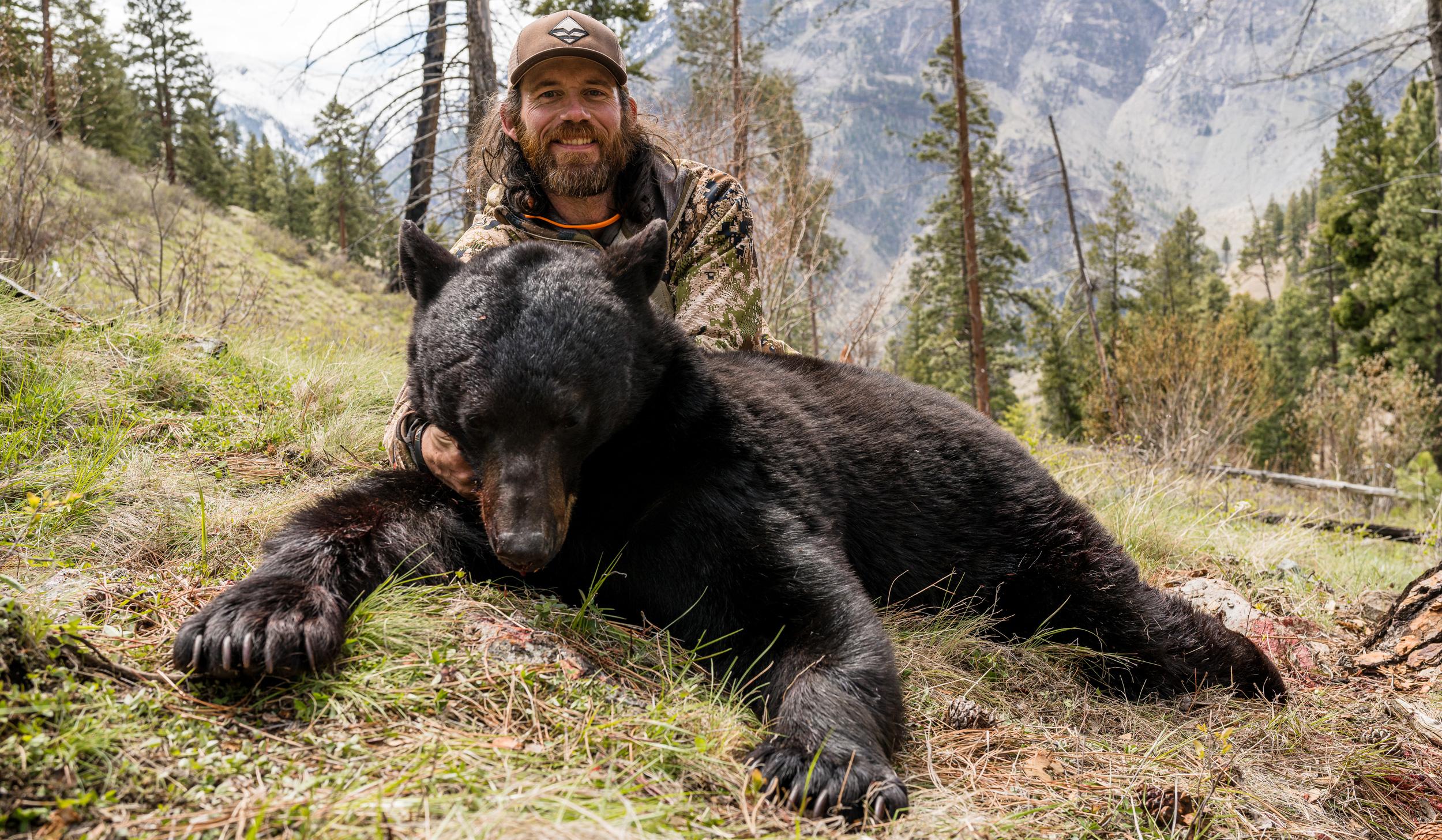
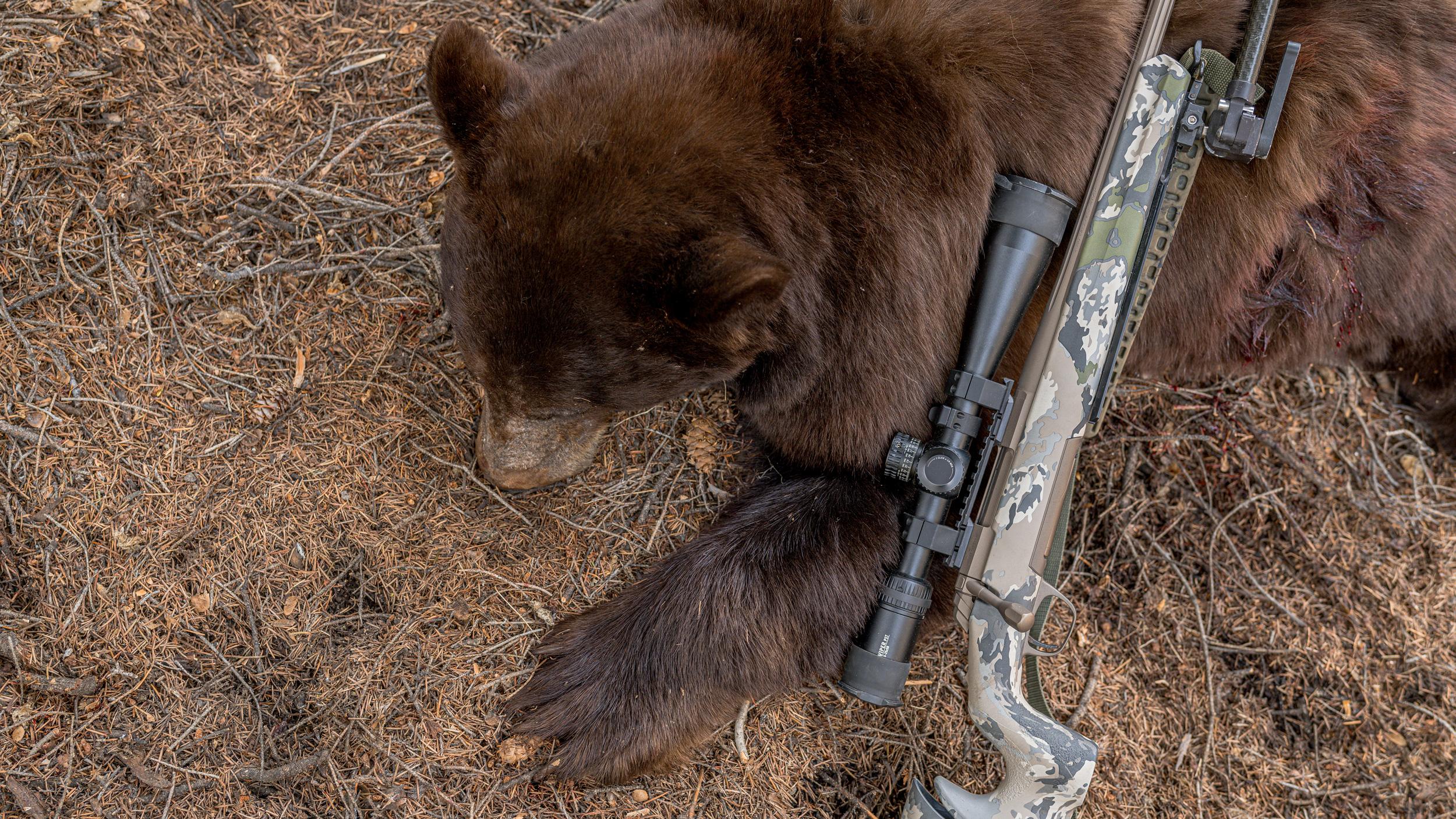
My largest black bear that I took with my Browning X-Bolt in 300 RUM.
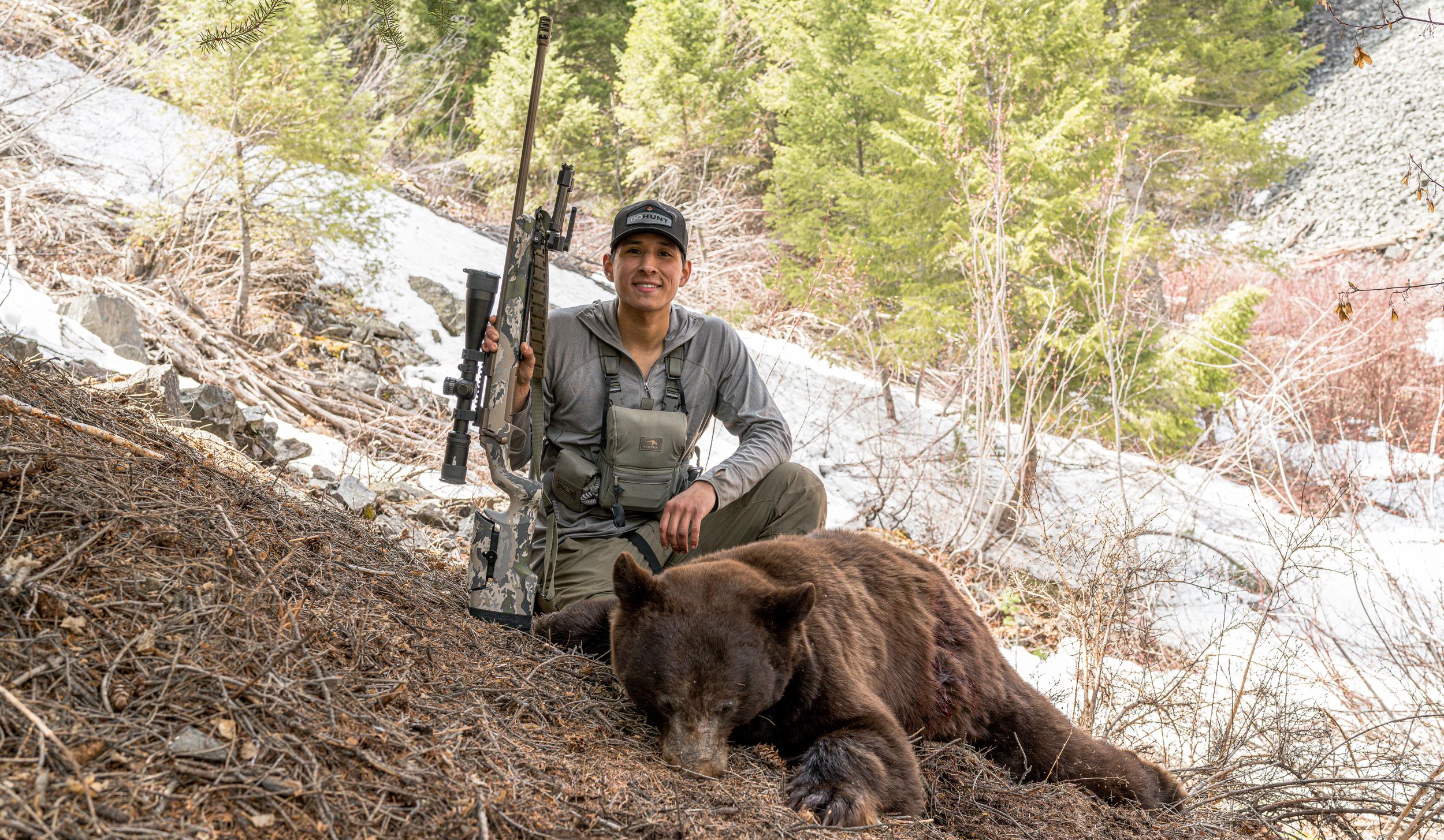
Omar with a black bear he took with my Browning X-Bolt 6.8 Western rifle.
I absolutely love my rifles, and in the above video, I take a dive into three rifles I wouldn't hesitate to take on a spring bear hunt.
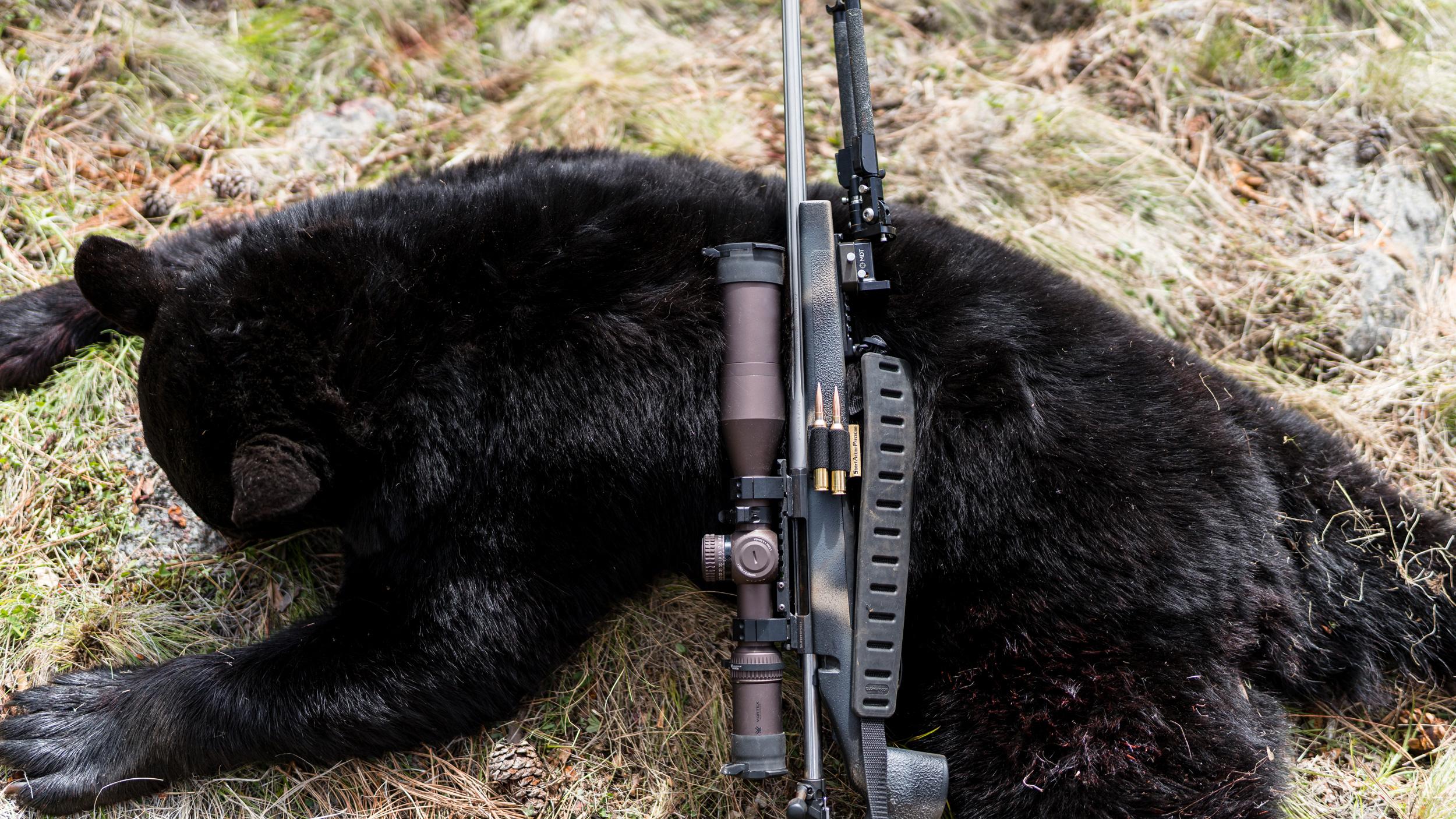
My personal favorite rifle for spring bear hunting—the Browning X-Bolt Max Long Range chambered in 300 Remington Ultra Magnum (RUM) with a McMillan A3-5 stock. This setup tips the scales at over 14 lbs, so it's not a lightweight rifle by any means. This exact rifle isn't made anymore, but the X-Bolt Pro McMillan Carbon Fiber would be something very similar to this rifle.
I've taken a bunch of bears with this rifle. And what is probably surprising to most, I do backpack hunt with this setup. Most people probably would make this heavy of a rifle a prime choice for scenarios where you’re hunting from logging roads, or maybe even driving around and glassing from a vehicle. Think shorter hikes, a few miles from a vehicle. The rifle is equipped with a Vortex Razor HD Gen III 6-36x56 riflescope in MOA and is a first focal plane riflescope, and he uses a Snowy Mountain Rifles 30 Cal Snowflake Self Timing Titanium 3 Port Brake (5/8-24). The bipod I use on this setup has been either the MDT Cky Pod Gen II Standard Pull or the Tricer RP. I appreciate how the extra weight of the overall rifle setup becomes an asset for me in shot stability and consistency—something crucial to me when trying to take a bear from steep angles or extended distances. The rifle also has a Salmon River Solutions full arca rail system to ensure optimal bipod/tripod use and level shooting on uneven terrain. This build isn't about going light—it’s about putting a round exactly where it needs to go, time after time. For this rifle, I shoot the Barnes 208-grain LRX BT bullets, and I handload them myself.
Next, the Browning X-Bolt Max Long Range in 6.8 Western, coming in around 12.5 lbs. Again, this isn't a lightweight rifle per se. This rifle serves as my year-round training platform and has proven its use on hunts time and time again. Designed for versatility, it's ideal for both frontcountry-style bear hunts on logging roads/hunts with great vehicle access, as well as backpack hunts. It features a Vortex Viper PST Gen II 5-25x50 FFP MOA Riflescope and is currently fitted with a Silencer Central Banish Backcountry suppressor, though I do typically lean toward muzzle brakes for hunting use, this setup with a suppressor is a dream to shoot, and I appreciate the suppressor during training sessions. In 2025, I decided to try a suppressor on hunts for the first time.
The rifle offers low recoil, making it a great option for hunters new to larger calibers or those who shoot frequently. It’s a confidence-inspiring rifle that performs in spring bear hunting situations. It's an excellent choice for hunters who want one rifle that does it all.
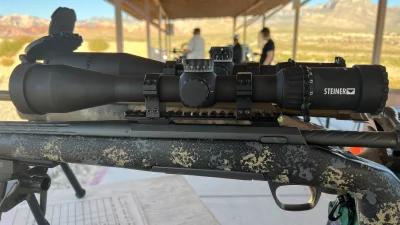
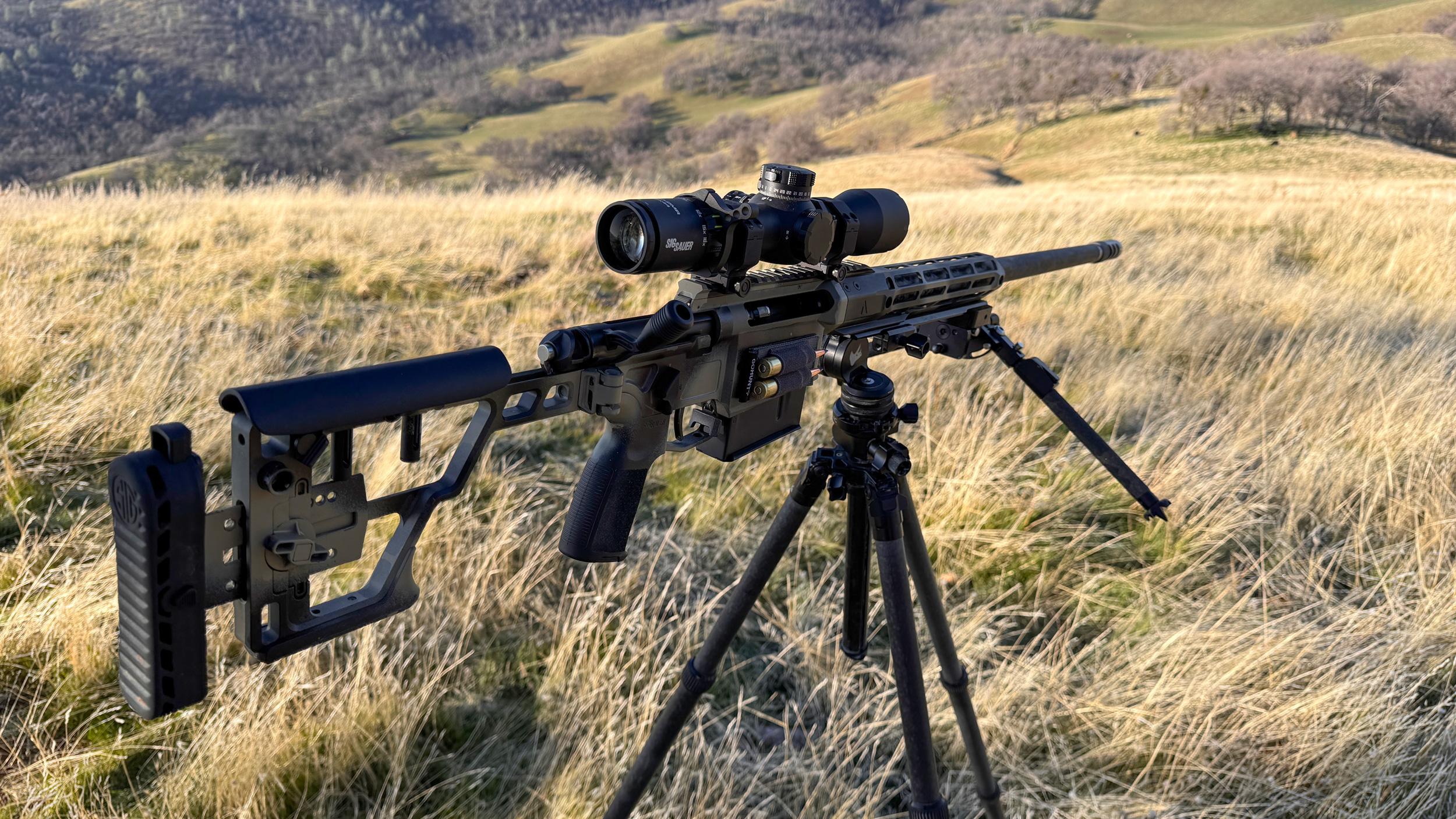
The final option is a recent addition to my rifle line and probably the most adjustable rifle: the Sig Sauer Cross-Magnum Sawtooth chambered in 7 PRC. At just under 12 lbs, this setup is all about packability without sacrificing accuracy. Its standout feature to me is the folding chassis stock, allowing the rifle to fit onto a backpack without sticking up high to catch on trees when hiking—something I greatly appreciate when maneuvering through dense terrain or avoiding barrel snag. It’s now set up with a Sig Sauer TANGO-DMR 5-30x56 riflescope (which I changed after shooting this video). Plus, it has a Proof carbon fiber barrel. I'm also using the Tricer RP bipod on this setup. The 7 PRC has really grown on me. I'm planning on taking this rifle to field-test in New Zealand this spring as well.
Each rifle offers a specific advantage depending on your bear hunting style—whether you're covering ground on foot in the backcountry or glassing from roads. My overarching message is to hunt with confidence, using a setup that fits your comfort zone and hunting conditions. And practice, practice, practice.