
Application insights, draw odds, tag fees and more in-depth information when it comes to South Dakota archery deer and archery antelope

Item | Habitat stamp |
|---|---|
Nonresident | $25 |
Item | *Any deer |
Nonresident | $375 |
Item | *Antlerless whitetail |
Nonresident | $100 |
Item | *Any buck antelope |
Nonresident | $375 |
Item | Preference Point fee |
Nonresident | $20 |
Item | Nonresident |
|---|---|
Habitat stamp | $25 |
*Any deer | $375 |
*Antlerless whitetail | $100 |
*Any buck antelope | $375 |
Preference Point fee | $20 |
West River Unit 15A | 2+ Pool |
|---|---|
Licenses available to preference group | 52 |
Number of applications | 10 |
Licenses issued | 10 |
Remaining licenses | 42 |
West River Unit 15A | 1+ Pool |
Licenses available to preference group | 42 |
Number of applications | 25 |
Licenses issued | 25 |
Remaining licenses | 17 |
West River Unit 15A | 0+ Pool |
Licenses available to preference group | 17 |
Number of applications | 41 |
Licenses issued | 17 |
Remaining licenses | 0 |
West River Unit 15A | Licenses available to preference group | Number of applications | Licenses issued | Remaining licenses |
|---|---|---|---|---|
2+ Pool | 52 | 10 | 10 | 42 |
1+ Pool | 42 | 25 | 25 | 17 |
0+ Pool | 17 | 41 | 17 | 0 |
Year |
Unit |
Type |
Odds |
2025 |
ADNP-ST1 |
Any deer |
100% at 1 |
Year | Unit | Type | Odds |
2025 | ADNP-ST1 | Any deer | 100% at 1 |
Unit | 07A |
|---|---|
Average size | 110” to 150” |
Trophy potential | 160”+ |
Unit | 24A |
Average size | 110” to 150” |
Trophy potential | 160”+ |
Unit | 26A |
Average size | 110” to 150” |
Trophy potential | 160”+ |
Unit | 30A |
Average size | 110” to 150” |
Trophy potential | 160”+ |
Unit | 33A |
Average size | 110” to 150” |
Trophy potential | 160”+ |
Unit | 37A |
Average size | 110” to 150” |
Trophy potential | 160”+ |
Unit | 38A |
Average size | 110” to 150” |
Trophy potential | 160”+ |
Unit | 45D |
Average size | 110” to 150” |
Trophy potential | 160”+ |
Unit | 57A |
Average size | 110” to 150” |
Trophy potential | 160”+ |
Unit | 58A |
Average size | 110” to 150” |
Trophy potential | 160”+ |
Unit | Average size | Trophy potential |
|---|---|---|
07A | 110” to 150” | 160”+ |
24A | 110” to 150” | 160”+ |
26A | 110” to 150” | 160”+ |
30A | 110” to 150” | 160”+ |
33A | 110” to 150” | 160”+ |
37A | 110” to 150” | 160”+ |
38A | 110” to 150” | 160”+ |
45D | 110” to 150” | 160”+ |
57A | 110” to 150” | 160”+ |
58A | 110” to 150” | 160”+ |
Unit | BD1 |
|---|---|
Whitetail trophy potential | 150”+ |
Mule deer trophy potential | 160”+ |
Percentage of public land | 64% |
Unit | 27A |
Whitetail trophy potential | 150”+ |
Mule deer trophy potential | 160”+ |
Percentage of public land | 31% |
Unit | 27B |
Whitetail trophy potential | 150”+ |
Mule deer trophy potential | 160”+ |
Percentage of public land | 28% |
Unit | 39A |
Whitetail trophy potential | 150”+ |
Mule deer trophy potential | 160”+ |
Percentage of public land | 24% |
Unit | 45B |
Whitetail trophy potential | 150”+ |
Mule deer trophy potential | 160”+ |
Percentage of public land | 19% |
Unit | 45D |
Whitetail trophy potential | 160”+ |
Mule deer trophy potential | 160”+ |
Percentage of public land | 48% |
Unit | 53A |
Whitetail trophy potential | 150”+ |
Mule deer trophy potential | 160”+ |
Percentage of public land | 19% |
Unit | Whitetail trophy potential | Mule deer trophy potential | Percentage of public land |
|---|---|---|---|
BD1 | 150”+ | 160”+ | 64% |
27A | 150”+ | 160”+ | 31% |
27B | 150”+ | 160”+ | 28% |
39A | 150”+ | 160”+ | 24% |
45B | 150”+ | 160”+ | 19% |
45D | 160”+ | 160”+ | 48% |
53A | 150”+ | 160”+ | 19% |
Year |
Unit |
Type |
Odds |
2025 |
ST1-01 |
Any antelope |
100% at 1 |
Year | Unit | Type | Odds |
2025 | ST1-01 | Any antelope | 100% at 1 |
Unit | 35A |
|---|---|
Average size | 65” to 70” |
Trophy potential | 75”+ |
Unit | 35B |
Average size | 65” to 70” |
Trophy potential | 75”+ |
Unit | 49A |
Average size | 65” to 70” |
Trophy potential | 75”+ |
Unit | 49B |
Average size | 65” to 70” |
Trophy potential | 75”+ |
Unit | 53A |
Average size | 65” to 70” |
Trophy potential | 75”+ |
Unit | 53B |
Average size | 65” to 70” |
Trophy potential | 75”+ |
Unit | Average size | Trophy potential |
|---|---|---|
35A | 65” to 70” | 75”+ |
35B | 65” to 70” | 75”+ |
49A | 65” to 70” | 75”+ |
49B | 65” to 70” | 75”+ |
53A | 65” to 70” | 75”+ |
53B | 65” to 70” | 75”+ |
Unit | 27A |
|---|---|
Trophy potential | 70”+ |
Percentage of public land | 35% |
Unit | 02A |
Trophy potential | 70”+ |
Percentage of public land | 34% |
Unit | 15A |
Trophy potential | 70”+ |
Percentage of public land | 24% |
Unit | 35A |
Trophy potential | 75”+ |
Percentage of public land | 20% |
Unit | 35B |
Trophy potential | 75”+ |
Percentage of public land | 20% |
Unit | 53A |
Trophy potential | 75”+ |
Percentage of public land | 19% |
Unit | Trophy potential | Percentage of public land |
|---|---|---|
27A | 70”+ | 35% |
02A | 70”+ | 34% |
15A | 70”+ | 24% |
35A | 75”+ | 20% |
35B | 75”+ | 20% |
53A | 75”+ | 19% |
The nonresident archery deer and antelope licenses provide a great opportunity to secure a public land archery tag for the 2026 season. With either license, hunters can pursue game on both private and public lands, with varying season dates. South Dakota also offers an over-the-counter (OTC) license for private land only for both species, but these come with certain restrictions. OTC licenses go on sale in June and remain available throughout the season. This article will walk you through the key details you need to know about each of these license options.
Note: The application deadline for public/private land archery deer is June 9, 2026, at 8:00 a.m. CDT, and the deadline for public/private land archery antelope is July 7, 2026, at 8:00 a.m. CDT. All applications must be submitted online.
There have been very few changes to the 2026 nonresident archery deer and antelope licenses. The draw system for these licenses is now in its third year, and there is still a solid opportunity to obtain a tag even without any preference points. Below are the draw odds tables that outline the details.
To aid in your research and planning efforts, we have a tool for Insiders called Hunt Planner. This tool will help you be more efficient at planning for hunts and also keep all your research data organized. No more notepads getting lost or headaches when trying to remember what units caught your eye during your research! Everything you need is always in one place at GOHUNT.
What can you do in Hunt Planner?
Point Tracker allows you to enter the number of points you have for each state and species and, as you research through Filtering and Draw Odds, your point total will automatically be highlighted.
To view more important information, including a state overview of South Dakota’s rules/regulations, the draw system, draw odds, and license fee, go to the South Dakota state profile. It also includes an interactive map where you can research unit boundaries and data on a unit-by-unit basis.
Note: South Dakota does use a weighted preference point system for all species.
* Tag fees are only required if you are successful in the draw.
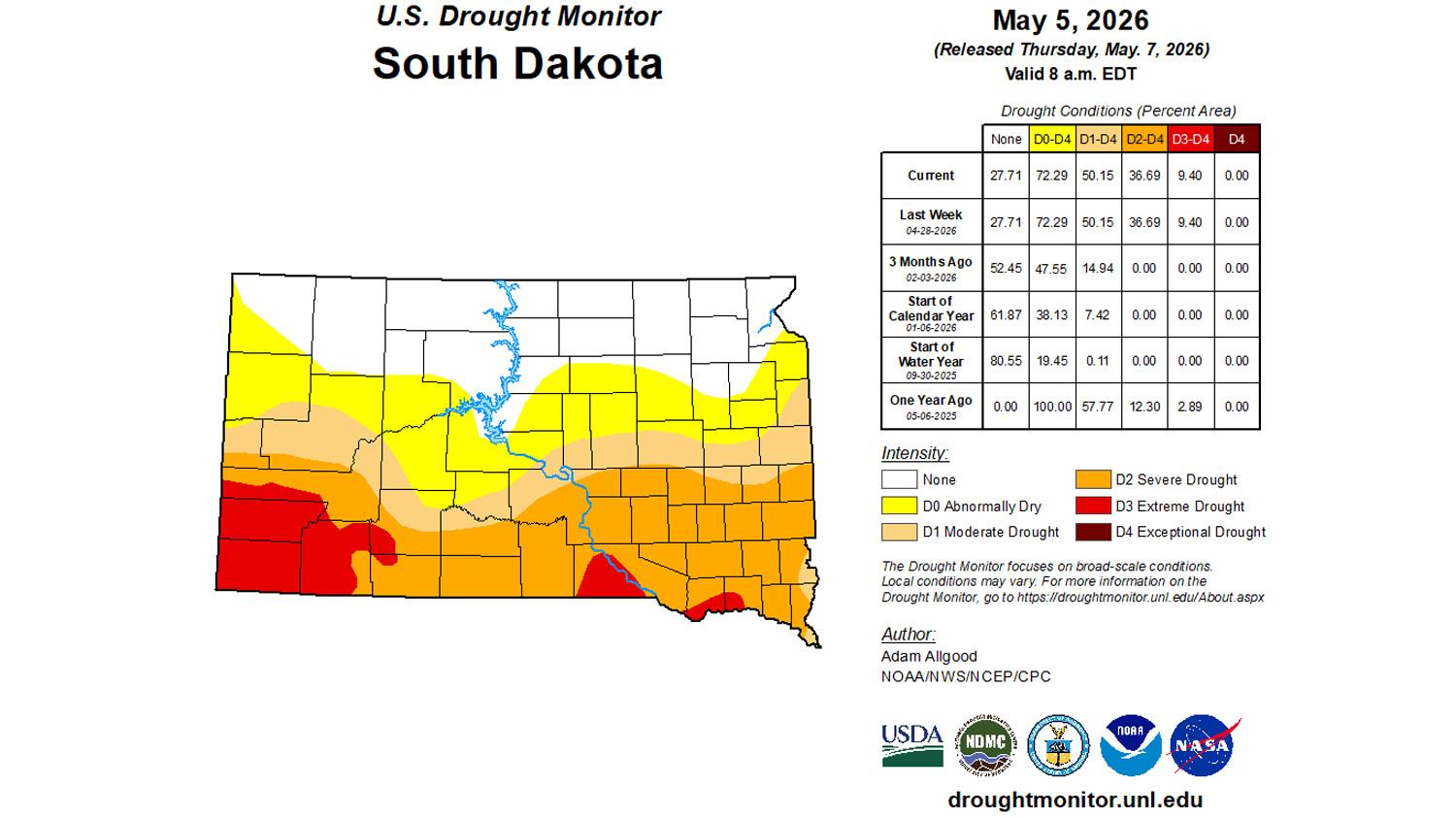
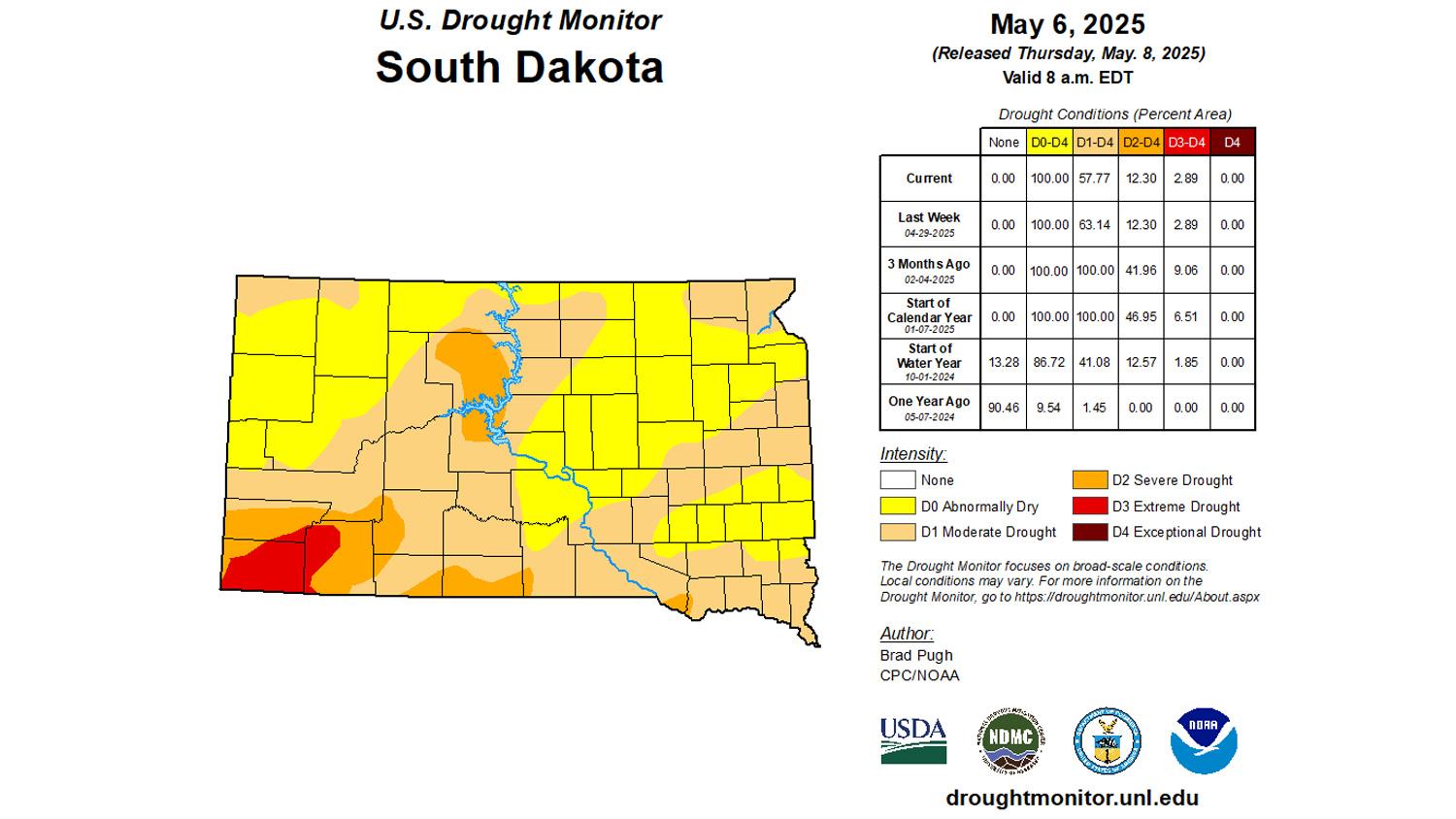
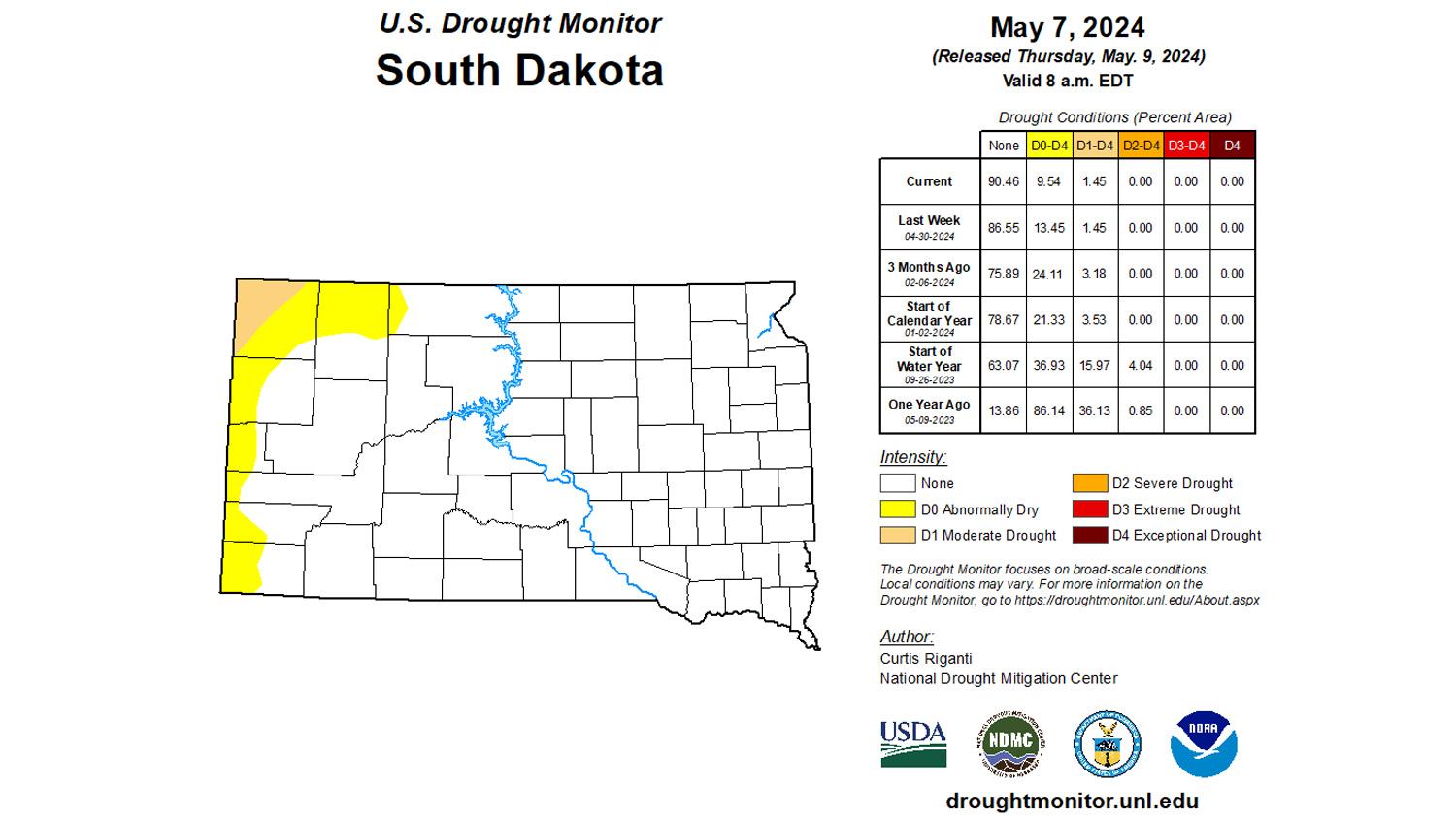
Compared to last year, South Dakota has actually fared fairly well in terms of moisture so far this year. This creates a more promising outlook for the 2026 hunting season, especially if additional spring and early summer rainfall materializes. However, as the map shows, the southern portion of the state is still experiencing moderate drought conditions.
South Dakota uses a weighted preference point system for all big game species and is used for your first choice only. They run a cubed point system, unlike most states that run a squared system, but with the same concept. For example, if you have four preference points, they then cube those points and add one for the current year. (4 x 4 x 4 + 1 = 65). So you would have 65 applications in the bucket for the specific hunt unit you wish to draw. From there, each application is assigned a random draw number, and they start the drawing process. They will start at the lowest draw number and work their way down the list.
If you are unsuccessful in drawing your first choice, you will be awarded a preference point. Only one preference point can be earned each year. If you do not wish to apply for a license or enter the draw, there is a separate preference point purchase period where you can buy a point for the following year. Preference points will be available for purchase from Sept. 15 through Dec. 15. These can be purchased through your Go Outdoors South Dakota profile.
For deer and antelope, they conduct the drawing and tag allocations a little differently than the other big game species. South Dakota uses a tiered preference pool system when conducting the draw. There is a 2+ point pool, a 1+ point pool, and a 0+ point pool. All licenses allocated for that hunt unit are available to everyone who is in the 2+ preference pool. This means that everyone who has 2+ preference points has the first shot at all those tags. If there are any licenses leftover after that draw, then anyone who has 1+ preference point now h/content/gohunt/us/en/as a shot. Any remaining licenses will then be made available to those in the 0+ preference pool. Here is an example below:
For more information on how the draw is conducted, you can check out the preference point page.
Group applications are allowed, with a maximum of six people per group. Everyone in the group must list the same first-choice unit on the application and be included in the same designated group.
One important thing to remember is that South Dakota does not average preference points for group applications. Instead, the application is entered into the draw using the lowest number of points held by anyone in the group. For example, if one person has six points and another has only two, the entire group application will go into the draw with two preference points.
Another key reminder: if a nonresident applies in a group with a resident, the entire application will be placed in the nonresident tag quota.
If you choose to return your tag, the tag fee will be refunded, and you will keep your preference point. License and application fees are not refundable. To receive a full refund, the tag must be returned before the start of the season for which the tag is valid.
South Dakota offers a couple of options for nonresidents when it comes to an archery deer tag. They have a limited public/private land, any deer draw license, which is valid statewide. The hunting season on private land runs from Sept. 1 through Jan. 1, 2027. The public land season starts Oct. 1 and runs through Jan. 1, 2027, but you can hunt both with the same license. Custer State Park is closed to all archery hunting.
The second opportunity for nonresidents is the OTC private land only licenses, which are also valid for any deer. You still need to apply for this license, but they are unlimited to nonresidents. This season also runs from Sept. 1 through Jan. 1, 2027. This license is private land only, which excludes all public lands and private lands leased for public hunting by South Dakota Game, Fish and Parks (SDGFP) in Walk-In Areas, Conservation Reserve Enhancement (CREP), and Controlled Hunting Access (CHAP) programs.
The last opportunity for nonresidents is the OTC archery antlerless whitetail license, which is valid on both public and private lands. This license is not valid statewide, but it does cover most of the state, so be sure to check the regulations on boundaries. The private land season dates run from Sept. 1 through Jan. 1, 2027, and the public land season dates run from Oct. 1 through Jan. 1, 2027. You can hunt both season dates with the same license.
Because much of South Dakota is privately owned, it’s important to do your research ahead of time to locate potential hunting areas and access points. Landowner permission is required to hunt private land in the state, so avoid applying for a license simply because it’s available. Make sure you have secured permission before submitting your application. If you wait until later in the season, obtaining permission may be much more difficult, or not possible at all.
South Dakota holds a strong population of mature bucks for both species, although whitetails tend to steal the spotlight. Every year, hunters take some truly impressive whitetail bucks across the state. Archery licenses are typically fairly easy to obtain and often require only a few preference points. The biggest hurdle for many hunters is the amount of private land. However, with the right permissions and access to available public land, hunters can find plenty of opportunity. Securing landowner permission before applying is key—and in many cases, it can also lead to access to areas that consistently produce mature bucks.
South Dakota provides a couple of options for nonresident archery antelope hunters. The first is a limited draw license issued through the state draw that is valid on both public and private land. This license allows hunters to harvest any buck antelope and is valid in all units that have an open firearm antelope season, which includes most of the western half of the state. The archery season runs from Aug. 16th through Oct. 3rd, 2026, although it closes during the rifle antelope season from Oct. 4th to 19th, 2026.
The second opportunity is an OTC archery antelope license that is valid on private land only. You have to apply for this license, but they are unlimited for nonresidents. It’s valid for one buck antelope on private land only (excluding all public lands and private lands leased for public hunting by SDGFP in Walk-In Areas, CREP, and CHAP programs). Season dates are the same and are also closed during the rifle season.
South Dakota offers a solid number of mature antelope bucks, and hunters harvest many quality animals each year. The biggest hurdle, however, is obtaining access to private land. Draw licenses are valid on public land, which is primarily found in the western part of the state. If you plan to focus on private land, it’s important to do your homework and secure permission from landowners before submitting your application.
Save unit seasons in Filtering;
Never lose track of units you want to further research;
Rank seasons;
Can help decide what unit to apply for or what order to place your units when applying on a state's website;
Compare seasons (up to three at a time);
Save the filter settings you used in Filtering to find a great hunt;
Add notes to your research folder under season level or hunt folder level; and
Much more!
You must apply online here. No paper applications will be accepted.
The application period for nonresident archery deer is from May 13, 2026, to June 9, 2026, at 8:00 a.m. CT.
The application period for nonresident archery antelope is from June 23, 2026, to July 7, 2026, at 8:00 a.m. CT.
OTC licenses are available for purchase in June.
You are required to purchase a $25 habitat stamp prior to applying.
Applicants do not have to front the cost of the license fee when applying.
If you are successful, your credit card on file will be charged the cost of the license fee.
Group applications are accepted for deer and antelope.
Nonresidents 16 years old or younger must include a hunter safety certificate number or the previous year’s hunting license when applying.